

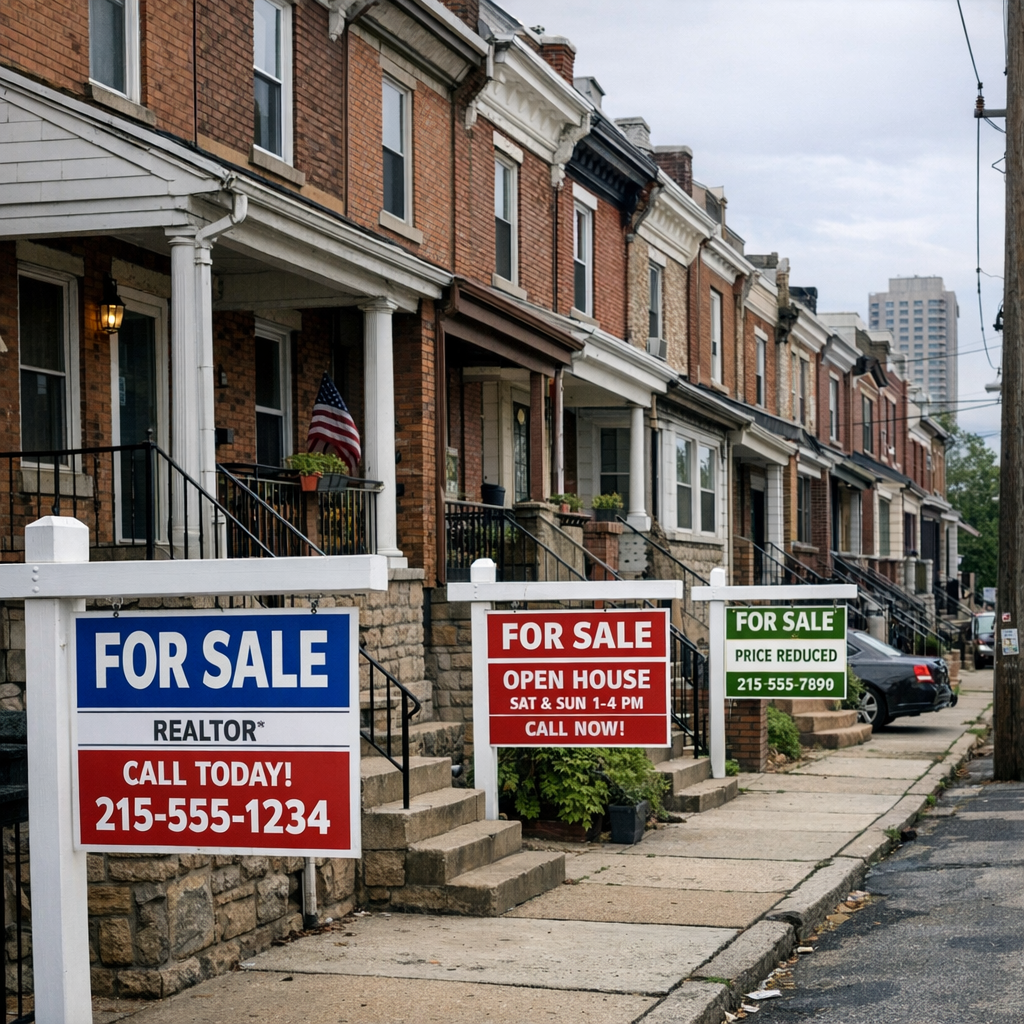
Philadelphia’s housing market is experiencing notable changes, with shifts in inventory, pricing, and development initiatives shaping the landscape for buyers and sellers alike.
Inventory and Pricing Trends
Recent data indicates a tightening of the housing market. In February 2026, active listings decreased by 2.3% year-over-year to 3,830, while new listings saw a significant drop of 12.6%, totaling 1,446 homes. This reduction in available properties has intensified competition among buyers. The median list price stood at $265,000, a slight 1.4% decrease from the previous year, yet still competitive compared to national figures. Notably, only 13.8% of listings underwent price reductions, suggesting that sellers are maintaining firm pricing strategies. Homes spent an average of 69 days on the market, closely aligning with national trends.
Development Initiatives
To address housing challenges, the city has launched the Housing Opportunities Made Easy (H.O.M.E.) Initiative. This ambitious plan aims to invest $2 billion over four years to build, restore, and preserve 30,000 housing units, ensuring affordable and accessible homes for all residents.
In line with these efforts, the Diamond Street Affordable Housing Project in the Strawberry Mansion neighborhood is set to deliver 46 units of long-term affordable workforce housing. This development addresses the critical housing shortage in the area and exemplifies the city’s commitment to expanding affordable housing options.
Market Dynamics
Homeownership tenure in Philadelphia has reached an average of 9.5 years, surpassing the national average of 8.6 years. This trend contributes to a stagnant housing market characterized by tight inventory and persistently high home prices.
Additionally, the prevalence of homeowners association (HOA) fees has increased, with 29% of listed homes in the Philadelphia metro area including such dues, up from 28% in 2024. These fees add to the overall cost of homeownership in the region.
For prospective buyers and sellers, staying informed about these evolving trends is crucial. The market’s current state underscores the importance of strategic decision-making and adaptability in navigating Philadelphia’s dynamic real estate landscape.