

By Isabella Adams
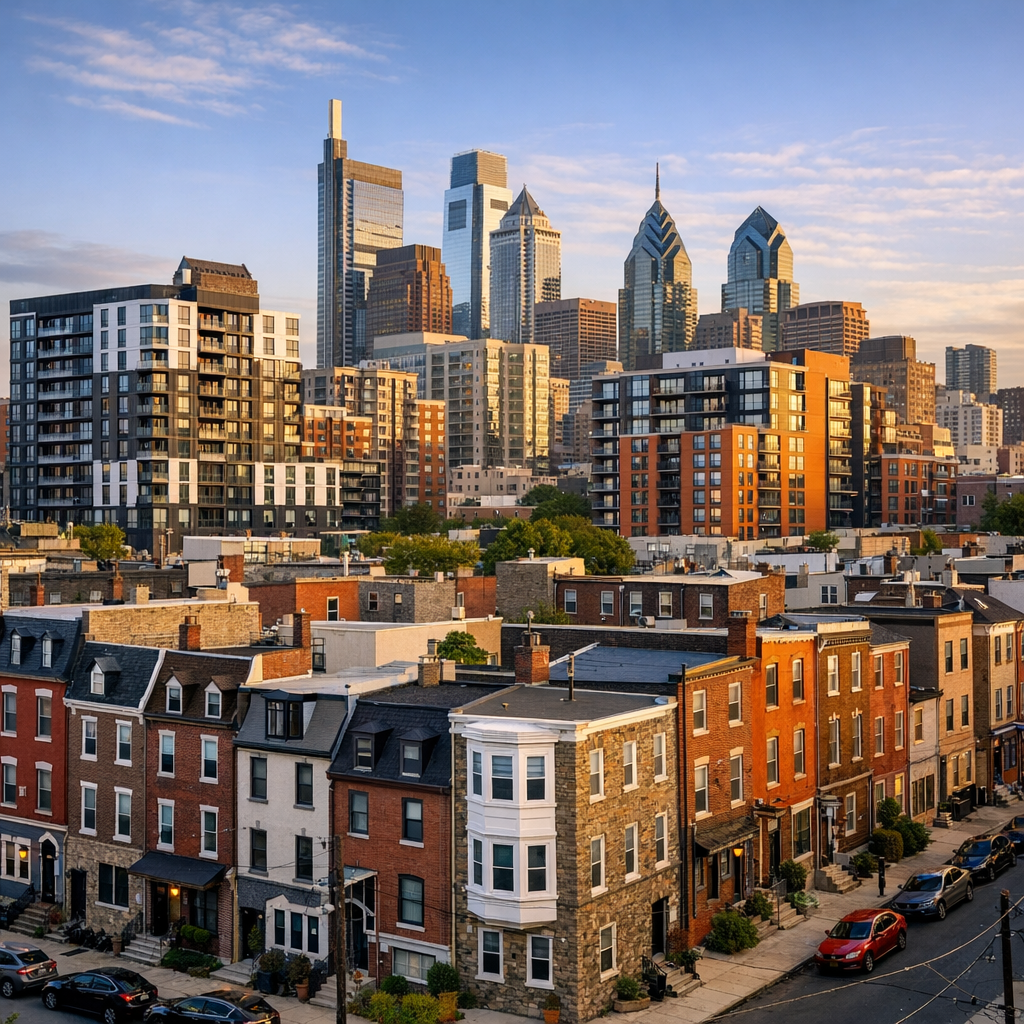
Philadelphia’s housing landscape is evolving rapidly—buyers, renters, and developers are all responding to shifting prices, changing supply, and ambitious municipal goals. If you live in Philly or are thinking of moving here, here’s a local guide to what’s happening in home buying, rentals, and development.
Home Prices & Buying Patterns
The median sale price for homes in Philadelphia recently reached around $295,000, marking about a 5.7% increase compared to the same period last year. Homes are also spending more time on the market—about 50 days on average—up from around 46 days a year ago. These trends suggest rising prices mixed with slightly slower sales. Zillow reports a lower median value—about $233,700—which reflects a wider sample of all home types including lower-cost properties. The discrepancy comes from different methodologies and which properties are included.
Rental Market Shifts
Renting in Philly shows mixed signals. One-bedroom units average about $1,323/month, down slightly year-over-year. On the higher end of the scale, average rents for two-bedroom apartments are closer to $1,700–$1,800. Vacancy rates are rising—the citywide apartment vacancy rate is hovering around 9.7%, up from earlier years, particularly noticeable in newly built units. Still, urban core areas are seeing renewed demand; renters are returning to Center City and nearby neighborhoods.
Local Development & Housing Policy
Philadelphia’s leadership has launched bold programs to reshape the housing future. The H.O.M.E. Initiative aims to deploy $2 billion over several years to create or preserve 30,000 housing units—rental and ownership—alongside stability programs for renters and homeowners alike.
Through Choice Neighborhoods, the city is targeting older distressed public housing and transforming entire neighborhoods—Sharswood/Blumberg and Bartram/Kingsessing being major examples. These efforts include mixed-income housing, job training, streetscape and infrastructure upgrades, and public amenities.
Developers are busy too. Center City alone has over $2.1 billion in development activity underway—projects ranging from apartments to mixed-use buildings. Building permit activity has cooled compared to completions, meaning the rate of new construction is slowing somewhat even as demand remains steady.
What It Means if You’re Buying or Renting
- If you’re buying: competition remains, especially for affordable and mid-priced homes. Expect to shop carefully and move quickly when you find something you like.
- If you’re renting: more options might be available, especially in newer complexes. But rising vacancies may help churn in lease terms—keep an eye out for concessions or lower rent increases.
- If you’re involved in development or policy: equity, affordability, neighborhood amenities, and long-term stability are front and center. Efforts like H.O.M.E. and Choice Neighborhoods show where public investment is going.
The housing market in Philadelphia may feel like a balancing act—between rising prices and softer rental demand, between rapid development and affordability challenges. Still, for many residents, these shifts offer both risk and opportunity. Stay tuned: implementation of city initiatives and affordable housing production will be key to how things evolve over the next few years.