

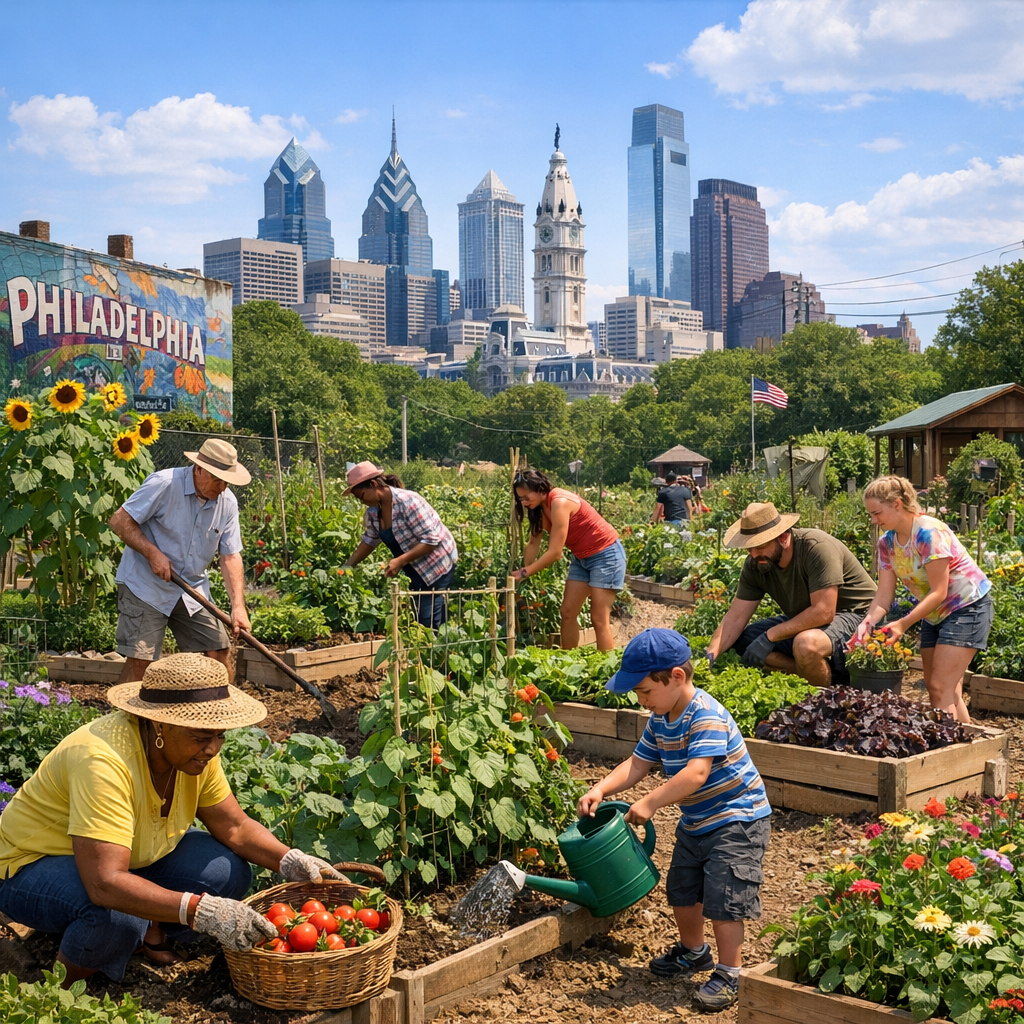
In the heart of Philadelphia, urban gardens are more than just plots of land; they are vibrant hubs of community engagement, education, and sustainability. These green spaces offer residents the opportunity to grow fresh produce, learn about agriculture, and build stronger neighborhood ties.
The Growth of Urban Agriculture
Philadelphia’s commitment to urban agriculture is evident through initiatives like Farm Philly, the city’s urban agriculture program. Established in 2014, Farm Philly supports over 60 agriculture projects on Parks & Recreation land, including community gardens, vegetable farms, and orchards. These projects not only provide fresh produce but also promote physical activity and environmental stewardship among residents.
Community Gardens: A Closer Look
Several community gardens across the city exemplify the positive impact of urban agriculture:
Schuylkill River Park Community Garden
Located near 25th and Spruce Streets, this garden comprises around 70 plots managed by local residents. Established in 1982, it transformed a former brickyard and railroad siding into a flourishing green space, demonstrating the potential of urban renewal through gardening.
Mill Creek Urban Farm
Founded in 2005 in West Philadelphia, Mill Creek Urban Farm is an educational farm led by people of color. It focuses on improving local access to fresh, chemical-free produce and offers farm-based learning programs for all ages, fostering a just and sustainable food system.
Benjamin Rush Community Garden
Situated in Northeast Philadelphia’s Benjamin Rush State Park, this garden is one of the largest community gardens globally, spanning over 11 acres. It provides residents with the opportunity to cultivate vegetables, flowers, and herbs, promoting organic gardening practices and community collaboration.
Citywide Initiatives and Future Plans
In 2019, Philadelphia Parks & Recreation initiated the city’s first urban agriculture plan, “Growing from the Root.” This comprehensive 10-year plan aims to support sustainable agricultural activities, confront structural inequalities, and invest in agriculture and food justice. The plan reflects input from over 650 residents and experts, emphasizing transparency, racial and economic justice, and inclusion.
Getting Involved
For residents interested in participating, numerous community gardens welcome new members and volunteers. Engaging in these spaces offers a chance to learn about sustainable agriculture, contribute to local food systems, and connect with neighbors. Additionally, programs like Farm Philly provide resources and support for those looking to start or join urban agriculture projects.
Urban gardens in Philadelphia are more than just places to grow food; they are catalysts for community development, education, and environmental sustainability. By participating in or supporting these initiatives, residents can play a vital role in cultivating a healthier, more connected city.