

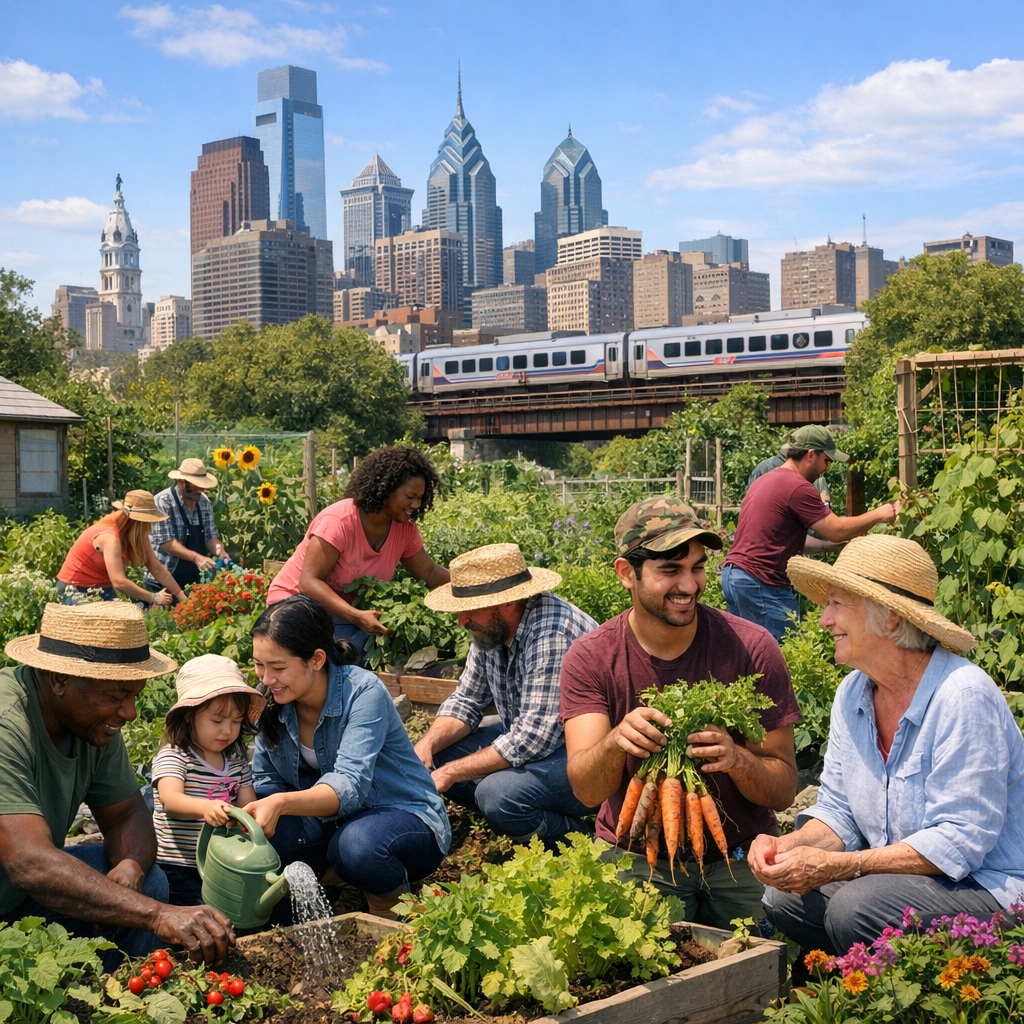
In the heart of Philadelphia, community gardens have blossomed into vital spaces that not only provide fresh produce but also strengthen neighborhood bonds and promote environmental stewardship. These green sanctuaries offer residents a chance to connect with nature, learn about sustainable practices, and engage with their communities.
The Growth of Community Gardens
Philadelphia boasts a rich tapestry of community gardens, each with its unique history and mission. For instance, the Sankofa Community Farm at Bartram’s Garden in Southwest Philadelphia hosts a thriving community garden where local residents plan and maintain garden beds with support from staff and youth interns. Similarly, the Capitolo Community Garden, established in 2009, comprises 54 in-ground plots and three raised beds, bringing together a diverse group of gardeners from the neighborhood.
Benefits Beyond the Harvest
These gardens offer more than just fresh fruits and vegetables. They serve as educational hubs, teaching residents about organic farming, composting, and the importance of biodiversity. The Awbury Community Garden, for example, provides over 60 plots, including 20 raised beds, and donates substantial quantities of food to local initiatives. Additionally, the Benjamin Rush Community Garden in Northeast Philadelphia, one of the largest community gardens globally, offers over 11 acres for residents to cultivate various plants, fostering a sense of community and shared purpose.
Getting Involved
For those interested in joining a community garden, the City of Philadelphia’s FarmPhilly program supports urban farming projects on public land, offering resources such as compost, workshops, and technical assistance. Prospective gardeners can find a nearby community garden through the program’s network and learn about eligibility and application processes.
Community gardens in Philadelphia are more than plots of land; they are vibrant spaces where residents come together to cultivate not only plants but also relationships and a shared commitment to a healthier, more sustainable city.