

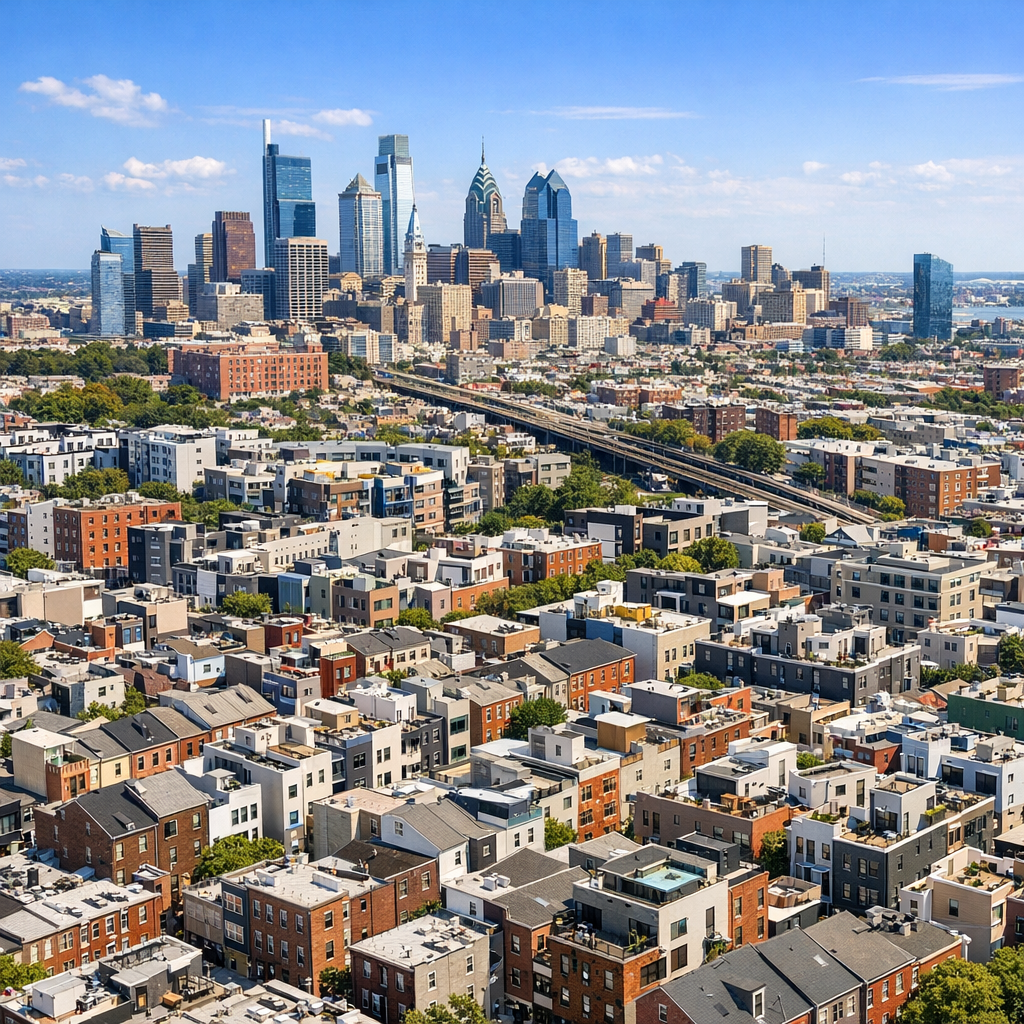
Philadelphia’s housing market is experiencing notable changes, with shifts in inventory, pricing, and development initiatives shaping the landscape for buyers and renters alike.
Market Trends and Inventory
Recent data indicates a tightening in the housing market. In February, active listings decreased by 2.3% year-over-year to 3,830, while new listings saw a significant drop of 12.6% compared to the previous year. This reduction in available homes has intensified competition among buyers. The median list price stood at $265,000, a slight decrease of 1.4% from the previous year, yet still maintaining Philadelphia’s reputation for relative affordability compared to national figures. Notably, only 13.8% of listings underwent price reductions, suggesting that sellers remain confident in their pricing strategies. Homes spent an average of 69 days on the market, closely aligning with national trends.
Development Initiatives
To address housing challenges, the city has launched significant development projects. Mayor Cherelle L. Parker’s Housing Opportunities Made Easy (H.O.M.E.) Initiative aims to invest $2 billion over four years to create and preserve 30,000 housing units. This ambitious plan seeks to provide affordable, accessible, and safe homes across Philadelphia.
Additionally, the Westpark Redevelopment project in West Philadelphia is underway. This public-private partnership plans to deliver 327 new homes in its first phase, with a focus on mixed-income housing. The project includes a mix of mid-rise buildings, row homes, and the rehabilitation of existing structures, aiming to reconnect the area to the surrounding neighborhood and provide much-needed housing options.
Homeownership and Rental Dynamics
Homeownership tenure in Philadelphia has reached an average of 9.5 years, surpassing the national average of 8.6 years. This trend contributes to a tight housing market, as fewer homes become available for sale.
On the rental front, the median rent in Philadelphia was $1,758 as of March 2026, reflecting a 2.9% year-over-year increase. This figure is slightly below the national average, indicating that while rents are rising, they remain relatively affordable compared to other major cities.
As Philadelphia continues to evolve, staying informed about these market trends and development projects is crucial for residents and prospective homeowners navigating the city’s dynamic housing landscape.