

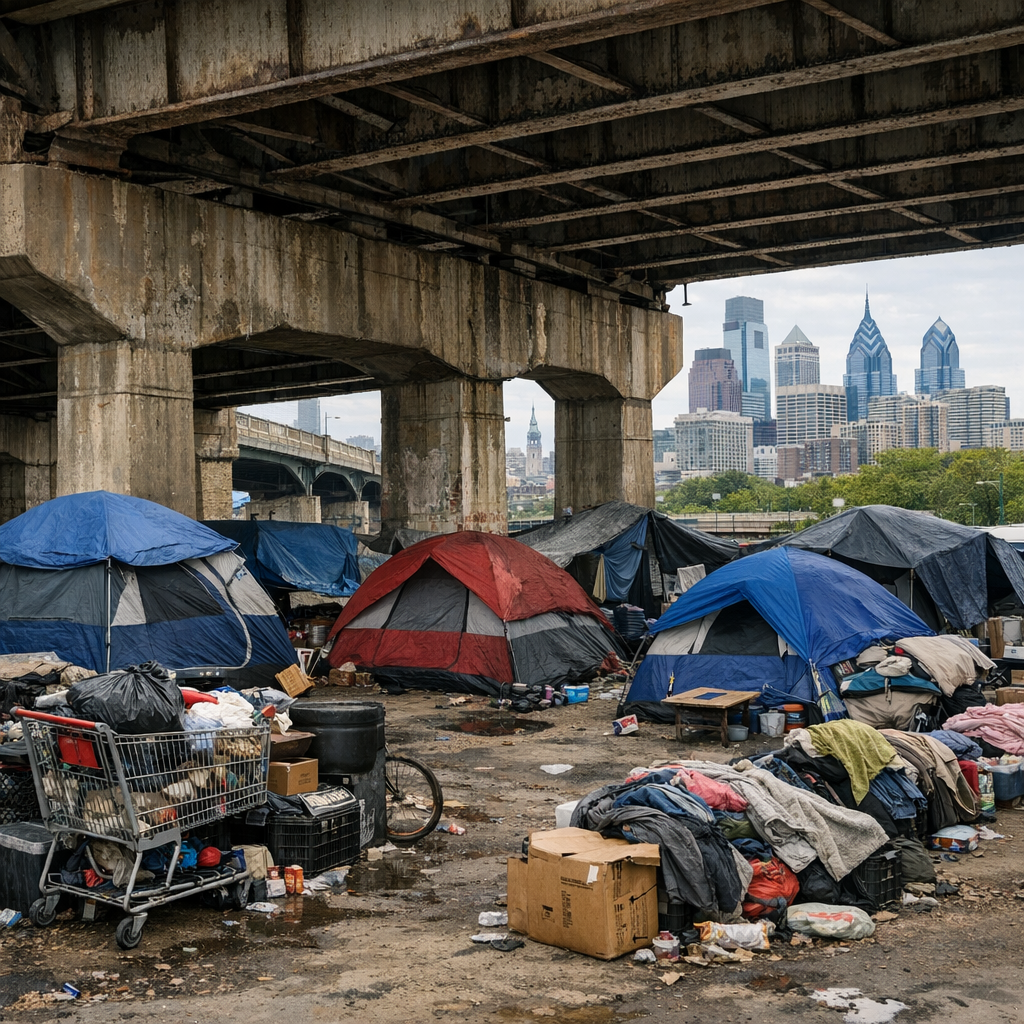
Philadelphia continues to grapple with a significant rise in homelessness, driven by a critical shortage of affordable housing and the ongoing opioid crisis. As of January, the city’s annual point-in-time survey identified 5,516 individuals experiencing homelessness, with 4,338 residing in shelters such as emergency housing or transitional facilities.
The city faces a deficit of over 64,500 affordable housing units for low-income households, exacerbating the issue. In response, Mayor Cherelle Parker’s administration has announced plans to establish a new temporary homeless shelter at 220 N. Broad St. in Center City, slated to open in January 2026. This initiative aims to provide immediate relief ahead of major events like the FIFA World Cup and America’s 250th birthday celebrations.
Additionally, the city is actively clearing homeless encampments and prioritizing housing improvements in neighborhoods severely affected by the heroin crisis, such as Kensington. Experts attribute the rising homelessness to both the housing shortage and challenges related to drug recovery, particularly in Kensington. Advocates warn that potential threats to federal food benefits and affordable housing funding could worsen the crisis in the months ahead.
Addressing homelessness in Philadelphia requires a multifaceted approach, including increasing affordable housing availability, enhancing support for individuals struggling with addiction, and ensuring sustained funding for social services. The city’s commitment to these initiatives will be crucial in mitigating the homelessness crisis and improving the quality of life for all residents.